




















































AI as a tool
A person prompts, copies and decides what happens next.
Faster individual tasksRECAST designs and deploys AI operating systems around your tools, workflows and business rules—recovering time, creating capacity and protecting margin without growing payroll at the same pace. The result is an operating asset, not another vendor-shaped dependency.
Leave the call with a verbal action plan. Receive a tailored blueprint and roadmap afterward.
Your business has outgrown the way it runs.
Leads arrive in one place. Context lives somewhere else. Reports are rebuilt by hand. Decisions wait for the person who remembers how everything connects. As the business grows, the founder—or a few indispensable people—becomes the human integration layer.
The answer is not another isolated app—or another dependency your team has to work around. It is an operating layer designed around how the business should work.
Before a model enters the conversation, we trace real work from arrival to completion: where it waits, how much paid attention it absorbs, what gets rebuilt, which decisions require judgment and what proves the work is done.
We do not automate the founder. We encode the repeatable route and preserve the decisions that still deserve their attention.
Most companies are still using AI one conversation at a time. AI-first businesses connect it to the systems where work already happens—giving it context, rules, permissions, memory and a measurable job to complete.
A person prompts, copies and decides what happens next.
Faster individual tasksA fixed trigger moves information between a few steps.
Faster repeatable sequencesContext-aware agents coordinate tools, workflows and approvals.
More business capacity and faster feedback loopsBusinesses operationalizing AI now are compounding process knowledge and capacity inside systems they can carry forward, while the rest of the market is still accumulating subscriptions and vendor dependencies.
A valuable hire adds ownership, relationships and judgment. But when a role exists mainly to chase inputs, copy information, rebuild context and escalate the same exceptions, the business is hiring around a process that still needs to be redesigned.
Judgment · Relationships · Exceptions · Growth
Context · Routing · Reconciliation · Records
If a role takes 30 days to find, 30 days to onboard and 30 more to reach expected performance, a quarter disappears before capacity arrives. If that person leaves, the loop begins again.
A bounded agent workflow can be mapped, built and proven once, then improved as a documented operating asset instead of repeatedly funding the same coordination through payroll.
More throughput before payroll or overhead has to rise at the same rate.
Recurring execution stops consuming founder and team hours.
Take on more work without equal coordination load.
People focus on judgment and relationships.
Rules, records and operating memory remain documented beyond a single hire or vendor.
Illustrative planning model—not a universal hiring or delivery benchmark. Some constraints need people. The audit uses your baseline to test time returned, payroll growth avoided or team time redeployed, margin potential and revenue capacity.
These technologies supply capabilities inside published RECAST systems. The business-specific workflow, permissions and records sit in the operating layer. Counts show case records, not partnerships or universal deployment state.
Third-party marks are the property of their respective owners. Their appearance identifies documented or scope-available technology and does not imply sponsorship, affiliation or endorsement.
RECAST documents what is live, what is supervised and what still depends on a provider or client action. Each case separates the business-specific operating layer from rented capabilities instead of turning a staged demonstration into a production claim.
A voice-led response system calls eligible leads, follows Linda's Care's qualification logic, retries safely, records outcomes in GoHighLevel and transfers qualified conversations to a human closer.
A persistent reporting assistant retrieves LEED-specific context, inspects the relevant source material, completes longer analyses and saves useful findings back into working memory.
Client quote“It’s changed my life literally.”
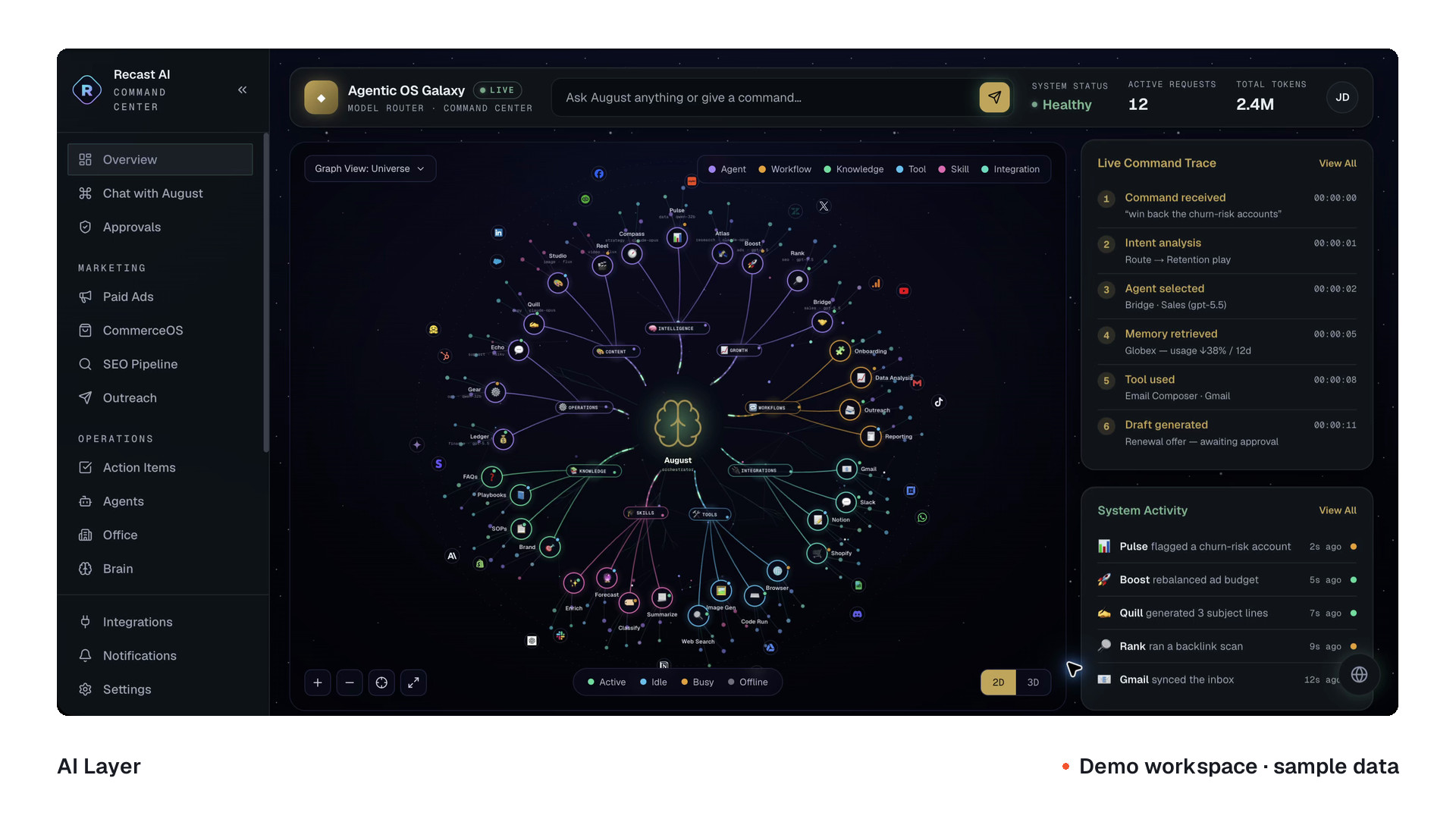
A governed multi-agent command center routes work across eight departmental agents, shared memory, client data and visible dashboards while retaining approval gates for consequential actions.
A stabilized multi-venture command layer separates the JoshuaAI and RUBN environments, routes authorized people and channels explicitly, and keeps venture knowledge available behind one operational surface.
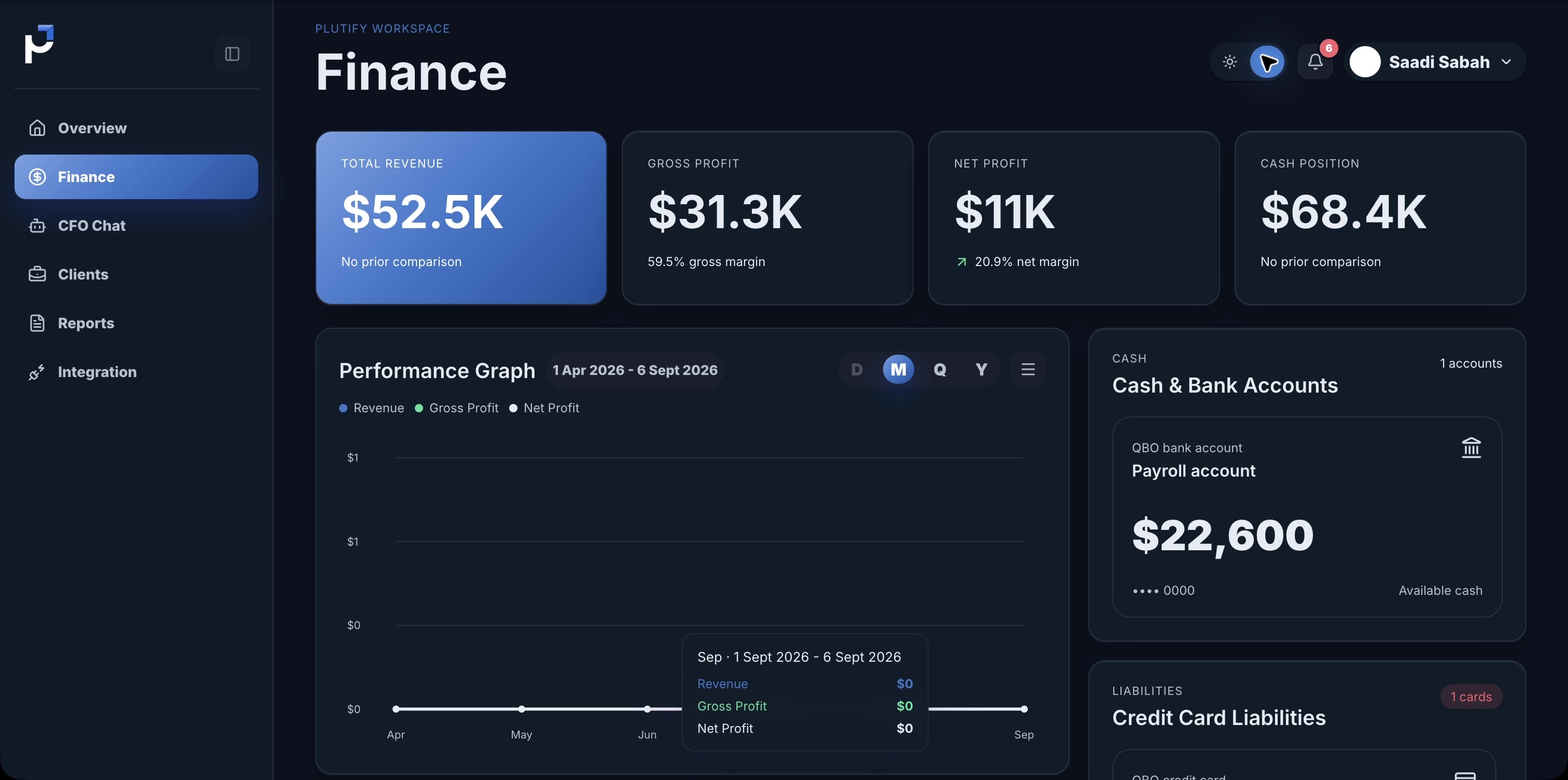
A white-labelled, tenant-isolated portal reads live QuickBooks data, presents standardized financial views, supports CFO-style questions and keeps every write or send behind explicit approval gates.
A recruitment operations assistant uses authoritative JobAdder helpers and separated account routes for research, email, scheduling and record work, while a clinic voice pilot remains gated until its launch inputs are approved.
Client quote“It’s brilliant. Like a game changer.”
Transformation fails when ambition outruns clarity. RECAST moves from operational truth to a prioritized build, then into real use with visible decisions, documented ownership, explicit provider boundaries and a handoff your team understands.
Map bottlenecks and establish the current baseline: volume, elapsed time, human touches, rework, operating cost and commercial consequence.
Verbal plan + written blueprint and roadmap
Define scope, workflows, permissions, ownership, provider dependencies, the value hypothesis, success measures and what remains human.
Approved system map, dependency register and implementation plan
Configure the operating layer, agents, integrations, memory and safeguards.
Visible progress, demonstrations and decision log
Run real tasks end to end and compare completion, elapsed time, human intervention and rework against the baseline.
Evidence, corrections and readiness status
Move into daily operation with onboarding, documentation, a dependency register and agreed ownership boundaries.
Running system, access map, training and runbook
Extend value only after the first workflow proves it—through monitoring, iteration and the next high-leverage route, while preserving the handoff and ownership model.
System health, improvements and prioritized expansion
Some decisions should remain human. We design the approval points instead of pretending they do not exist.
Every engagement starts with the operation, not a template. Claw gives RECAST a proven deployment foundation; the audit determines the workflows, integrations, controls and implementation depth required.
A focused AI operating layer for a founder or business unit ready to transform the highest-leverage workflows first.
Core operations · sales and CRM · research · content assistance · reporting · standard integrationsA broader, deeper operating layer for established businesses coordinating more functions, systems, permissions and custom workflows.
Advanced operations · finance-sensitive work · multi-brand or multi-team environments · custom workflows · deeper integrationsA scoped engagement for larger operations, unusual infrastructure, compliance requirements or transformation spanning multiple business functions.
Models, APIs and providers remain identifiable components, so one can change without forcing the business workflow to start again.
Routine work can move quickly; spending, publishing, finance and other consequential actions can remain behind approval.
Contracted deliverables, accounts, access, documentation and handoff are defined around your environment and the signed scope.
Agent roles, escalation rules, completion records and external dependencies are documented so your team can understand what runs and what it relies on.
Built for your operation. Deployed into your environment. Documented for your team. Contracted ownership follows the signed scope; third-party platforms and licenses remain theirs.
RECAST was founded by Zuheir Daher, an Industrial Engineer specialized in systems engineering. After a decade in technology and years working directly with AI, he built RECAST around a practical conviction: transformation only matters when the system works inside the operation.
Zuheir leads strategy and architecture with a core team spanning growth, development, implementation and client success. The people shown here hold direct responsibility for making the system useful, adopted and real.


We map the bottlenecks, hours consumed, payroll pressure and provider dependencies—then identify the first workflow where a controlled AI operating layer can create measurable capacity.
Best for founders and business owners with an active operation, real revenue and a serious intention to implement—not collect another list of tools.
Most focused implementation engagements begin at $5,000 or the applicable market equivalent; German/DACH engagements begin at €5,000. Scope is judged against your economics: time returned, capacity created, payroll growth avoided or team time redeployed, margin potential and operating knowledge retained.
Select a time below. We will use the call to map the constraint and identify the most valuable place to begin.